
2025: The Year I Stopped Writing About Building And Actually Started Building With AI
How launching AI tools, creating a 25-day AI challenge, and connecting with an incredible community taught me that product management is 90% about people and 10% about features.

As I close my laptop for the last time in 2025, I can’t help but laugh at how wrong I was about this year.
In January, I thought 2025 would be the year I’d master AI theory. Write more about frameworks. Maybe interview some AI experts. You know, the safe stuff.
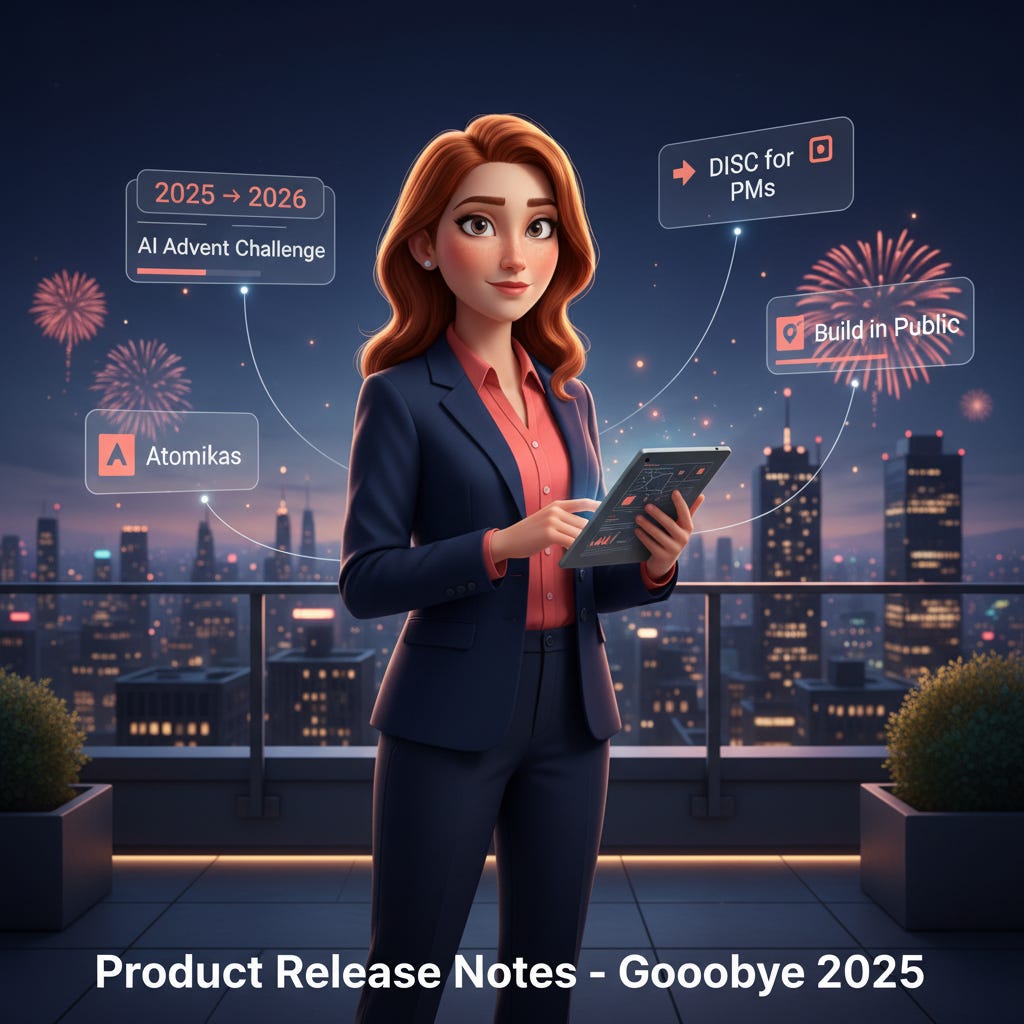
Instead, I built things. Lots of things. I launched an AI Advent Challenge that attracted hundreds of participants. I created a DISC assessment tool specifically for product managers. I prototyped features I’d been talking about for months, like that abandoned multilingual Substack translator.
And here’s what nobody tells you about building in public: the moments that scare you the most are usually the ones that matter the most.
Hi 👋 I’m Elena, a Product Manager who ships fast and learns publicly. I write about AI tools, rapid prototyping, and what actually works versus what’s just innovation theater in corporate. Want to join me?
The Shift From Theory To Practice
Let me be honest. For most of my career, I’ve been that product manager who writes extensively about best practices but hesitates when it’s time to ship something myself. I’d spend weeks perfecting a feature spec but months delaying a side project.
Sound familiar?
According to recent data, 75% of no-code apps in 2024 met or exceeded performance expectations. Companies using these tools reported saving up to 70% on development costs and building apps 10 times faster than traditional methods.
But statistics don’t capture the real transformation. It’s not about speed or cost savings. It’s about finally closing the gap between what you know and what you do.
In May, I wrote about how to jump into the rapidly AI prototyping era. I explained tools like Lovable, Bolt, and v0. I walked through the process step by step.
Then something clicked: why am I just writing about this when I could be doing it?
What I Actually Built This Year
Here’s the uncomfortable truth about building in public. You can’t hide behind perfect planning. You can’t delay until everything is ready. You just have to ship and learn.
The AI Advent Challenge became my biggest launch of 2025. Twenty-five days, twenty-five AI skills, hundreds of participants learning together. I built the entire platform using the same AI prototyping tools I’d been writing about. The irony wasn’t lost on me.
What made it work? Not the technology. The community. People showing up daily, sharing their progress, helping each other when they got stuck. That’s when I realized: product management isn’t about the features you build. It’s about the people who use them.
The DISC Assessment Tool came from pure frustration. I wrote about why product leaders are terrible at difficult conversations and how understanding communication styles could help. But traditional DISC tests are generic and unhelpful for the specific challenges PMs face.
So I built one. Tailored for product managers. Powered by AI. With concrete playbooks for handling stakeholder conflicts.
Did it work perfectly on launch? No. Did I learn more from shipping an imperfect version than I would have from planning a perfect one? Absolutely.
Atomikas became my most ambitious build. A platform designed to help women navigate tech careers, validate ideas, and find community. I wrote about how I built a $15K app for $0 in one week. The real challenge wasn’t the technology. It was understanding that getting women to trust a platform designed for their professional growth is far harder than building the platform itself.
The Translation Prototype started as a personal pain point. I write in English but wanted to reach Spanish-speaking readers without manually reformatting everything. I documented the entire process of building it in 30 minutes with Lovable.
SheBuilds Hackathon was one of those experiences that reminded me why I love this work. Participating in the SheBuilds event pushed me to develop two completely new ideas under time pressure (you’ll see these coming in 2026!). The hackathon format forces you to stop overthinking and just ship. I learned more in those few days than I would have in weeks of careful planning.
The lesson across all of these? The barrier between having an idea and testing it is smaller than we think.
The Lessons That Changed Everything
1. Building Beats Planning Every Time
I spent years planning perfect products. You know what I learned this year? The best product plan is a working prototype with human in mind.
Not a 40-slide deck. Not a perfectly formatted PRD. A thing people can touch, break, and give you honest feedback about. If it wows them, you’re on the right track.
As I explored in the dark side of AI prototyping, yes, you’ll accumulate technical debt. Yes, things will break. But you’ll learn in days what research would take weeks to uncover.
2. Your Communication Style Matters More Than Your Technical Skills
Remember that DISC tool I mentioned? Building it forced me to confront something uncomfortable: most conflicts in product development aren’t about the work. They’re about how different people process information.
That’s why I wrote how to win over any stakeholder with just one meeting. Because I kept watching talented PMs fail not because their ideas were bad, but because they couldn’t adapt their communication style.
Your VP of Sales doesn’t care about technical architecture. Your engineer doesn’t want to hear about quarterly revenue targets. Stop trying to convince everyone with the same approach.
3. Imperfect Action Trumps Perfect Inaction
This one hurt to learn.
The old me would have delayed launching the AI Advent Challenge if possible, because I wanted everything to be perfect. Clean UI. Zero bugs. Comprehensive documentation.
but you know what actually happened? I launched it slightly broken and instead of fixing everything I trusted in my PM instincts to prioritize what to fix.
Yet people actually didn’t care much about bugs.
They cared that I showed up, fixed it quickly, and kept going. They cared about the value, not the polish.
Research shows that the AI prototyping tools market grew from $1.2 billion in 2024 to $1.48 billion in 2025, with projections reaching $3.42 billion by 2029. That’s a compound annual growth rate of 23.3%.
Why does this matter? Because while you’re waiting for perfect, dozens of builders are shipping imperfect and learning much faster.
The Writers/Creators Who Made This Year Incredible
One of the unexpected joys of 2025 was connecting with an incredible community of writers who are also builders. These people inspire me, challenge me, and make this work feel less lonely.
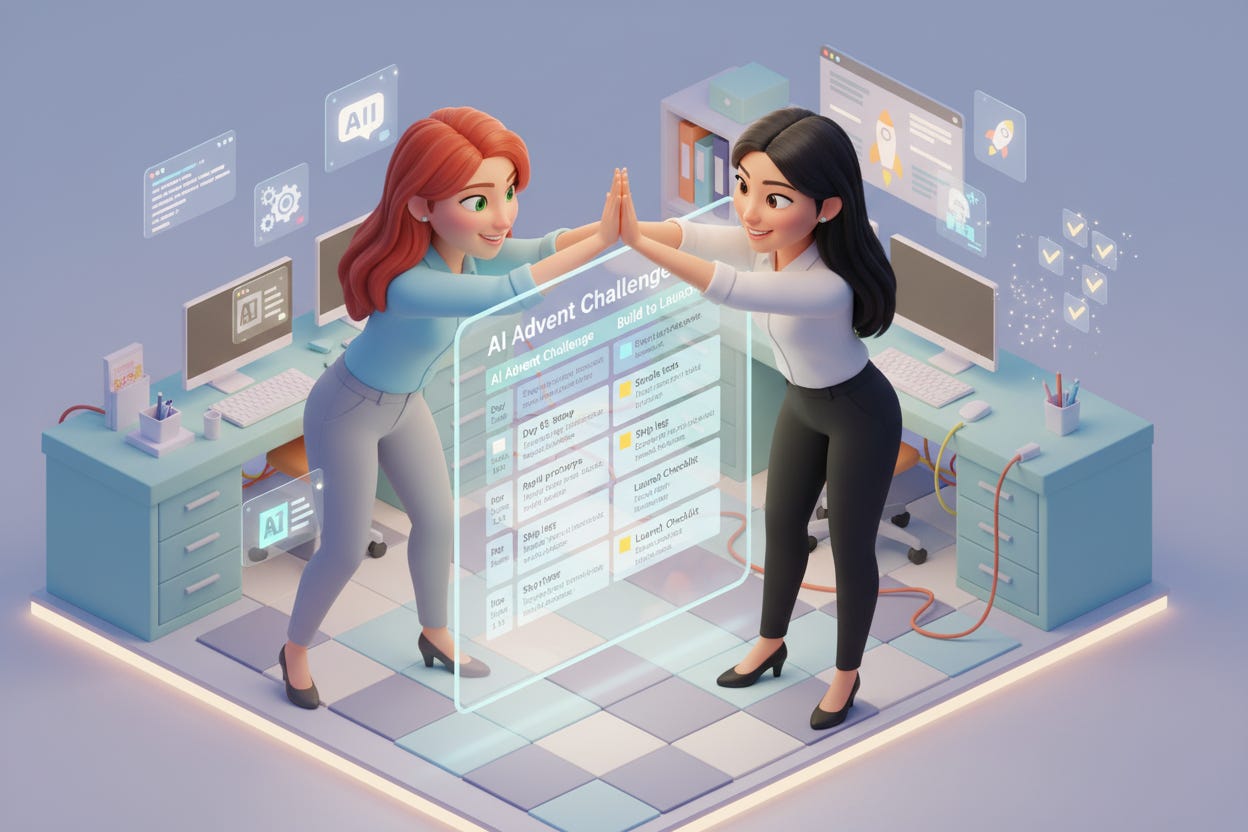
Jenny Ouyang consistently ships AI apps while documenting her entire process. Her recent smoke testing guide for vibe coders is my go-to whenever I launch something new. She proved you can build fast AND maintain quality. Jenny Ouyang you’re building the community every vibe coder needs.
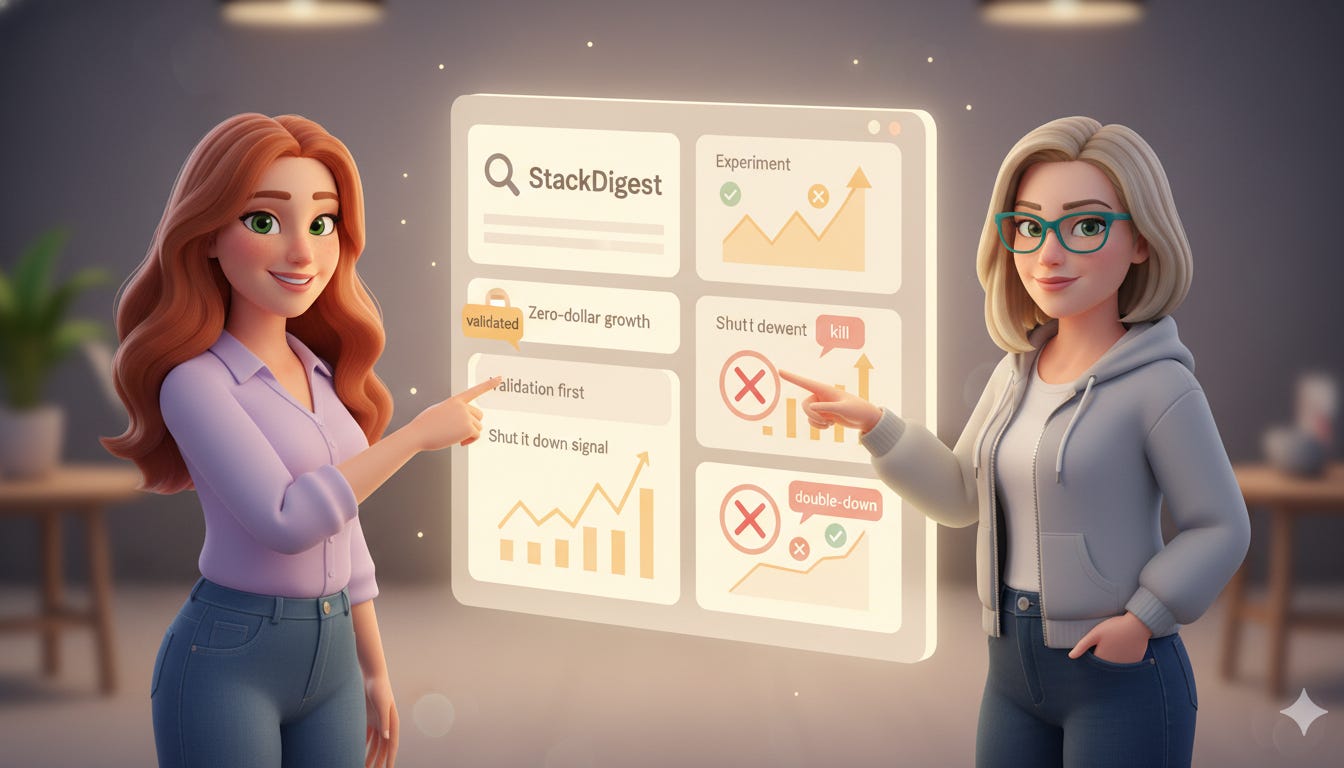
Karen Spinner created StackDigest and showed me what zero-dollar growth actually looks like. We collaborated on breaking down how she built it, and her approach to validation before scaling, and how to signal when to shut it down without hesitation. Karen’s work at Wondering About AI is a masterclass in building with users, not for them.
Karo (Product with Attitude) who inspired me to build in public before joining the SheBuilds program. Karo has proven that building in this community space is absolutely worthwhile!
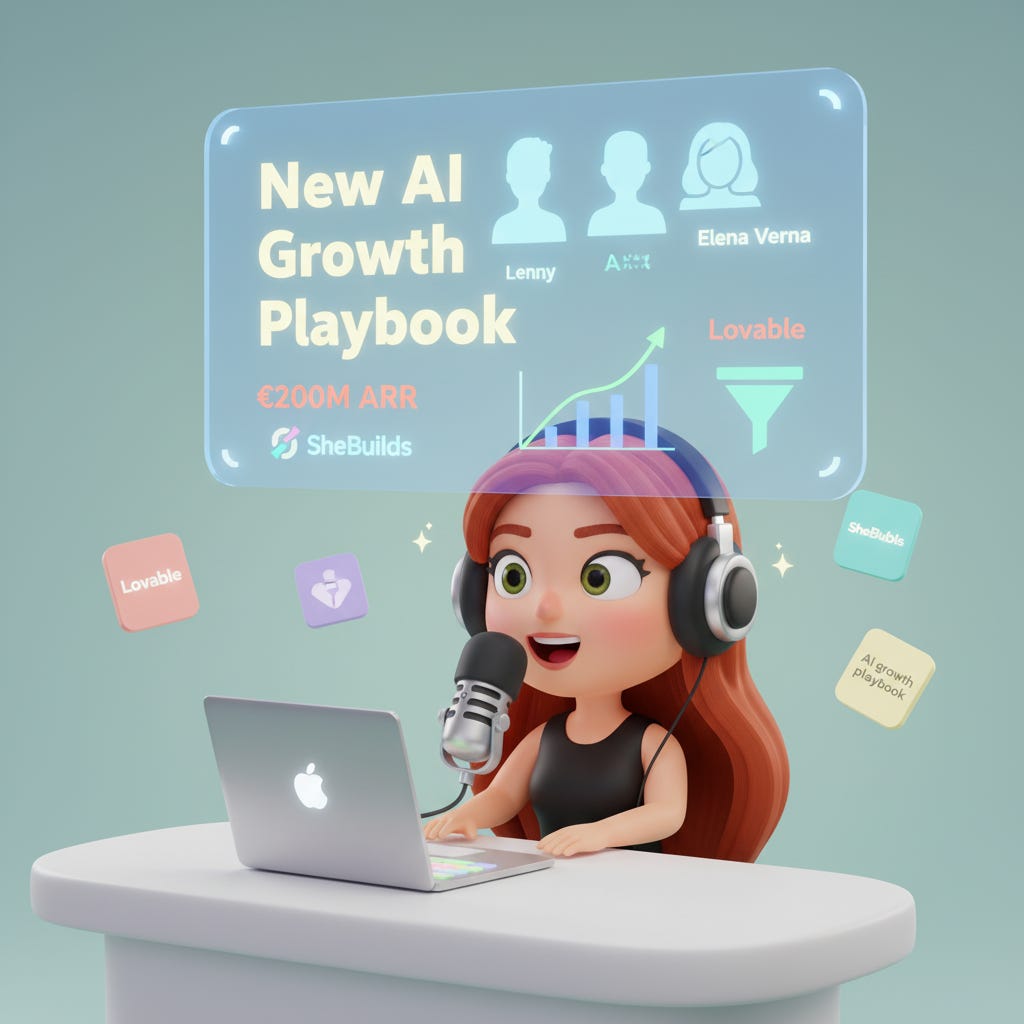
My favorite Lenny Rachitsky podcast was with the amazing Elena Verna where she talks more about SheBuilds and How Lovable hit $200M ARR in one year. This one absolutely blew my mind!
And of course, Lenny Rachitsky and Mike Taylor answered the question everyone was asking: How close is AI to replacing product managers? Spoiler: not as close as you fear, but closer than you think if you don’t adapt.
Honorable Mentions 2025
And so much more! OMG, I still need to tag so many friends! Check out our recommendations page.
Thank you all for making 2025 a year of collaboration, not competition. Your work inspires me to keep building, keep sharing, and keep pushing what’s possible.
Writers I want to read more on 2026
Thanks to recommendations from our friends, I have these writers on my list, but I haven’t had time to get to know you better yet. Anyway, the list is:
Do you have any other recommendations for newsletters? Would you like to see new collaborators in this space? Share your thoughts in the comments below!
What You Should Read While I’m Away
As I mentioned, I’m taking the last two weeks of December off. It’s become a tradition, and honestly, after launching the AI Advent Challenge and keeping up with weekly posts, I need it.
But that doesn’t mean you have to stop learning. Here are the posts from 2025 that resonated most with readers:
On Building With AI
How AI Has Made Me Better And Efficient At Work - The post that started everything. Twenty prompts that changed how I work. According to LinkedIn, 91% of professionals are incorporating AI into daily workflows, but most don’t talk about it. This post breaks the silence.
How To Jump Into The Rapidly AI Prototyping Era - The complete guide to tools like Lovable, Bolt, and v0. Plus the story of how I prototyped that Substack translation feature in 30 minutes.
The Dark Side Of AI Prototyping: Technical Debt - Because speed without guardrails creates problems. Teams using these tools without discipline see 3x more production delays.
On Communication And Leadership
Why Product Managers Are Terrible At Difficult Conversations - The post that led to the DISC tool. With data showing that 49% of workplace conflict comes from personality clashes, not strategy disagreements.
How To Win Over Any Stakeholder With Just One Meeting - The framework I wish someone had taught me five years ago.
How To Be An Assertive Product Manager - Because saying no is a skill that most PMs never learn.
On Professional Growth
The AI PM Job Hunt Insider’s Playbook - How a small group of PMs are landing $200K to $465K roles while others struggle. The market is brutal, but there’s a pattern to who succeeds.
How To Overcome Obstacles and Keep Moving Forward - For those days when everything feels impossible. Which, if you’re a PM, is probably Tuesday.
Remarkable Lessons From 2 Years Of Weekly Writing - What happens when you commit to showing up consistently. Spoiler: you learn more than you teach.
AI Found 12 Major Flaws in My App Before I Wasted Real User Feedback - How synthetic user research identified critical issues in Atomikas before real users ever saw them.
Is Your AI Poisoned? The 7 Checks To Catch It Fast - A practical playbook for detecting AI poisoning and protecting user trust. Because one bad dataset can destroy months of work.
A Small Gift For You 🎁
To celebrate this year of building together, I’m keeping all my AI prompt templates and resources free through January. Grab them before the archive locks:
→ 20+ AI Prompts for Product Managers
→ Take the DISC Assessment (Free for paid subscribers)
No paywall. No catch. Just tools that have made my work better, and I hope they’ll do the same for you.
What’s Coming In 2026
I’m not making big promises about 2026. I’ve learned that the best plans emerge from doing, not declaring.
But here’s what I’m excited about:
➡️ More building, less theorizing. Every article should come with a working prototype or a concrete tool you can use. No more “here’s how you could do this.” Only “here’s what I did and what happened.”
➡️ Deeper dives into communication. The DISC tool revealed something important: PMs are hungry for practical guidance on navigating difficult conversations. I want to explore personality dynamics, conflict resolution, and stakeholder management with the same depth I’ve applied to AI tools.
➡️ Community-driven content. The AI Advent Challenge proved that learning together beats learning alone. I’m exploring ways to make this newsletter more interactive, more collaborative, more useful.
➡️ More real case studies. Not the polished success stories. The messy middle. The failures that taught me more than wins. The products that flopped and why.
From all these experiences and lessons learned, I am now developing two new B2B SaaS products, so stay tuned to find out what they are!
There will probably be some experiments that I haven’t thought of yet. The best ideas don’t come from planning. They come from building and seeing what happens.
I’m also joining Cozora in 2026, and I’ll be conducting live sessions to show you my approach to building with AI, among other things. I really hope to see you there next year! It’s going to be amazing, so here’s a gift to help you secure your spot: Use code HOLIDAY30 to enjoy 30% off for 12 months. the coupon expires January 15, 2026.
The Question I Want You To Answer
Before I sign off for two weeks, I need your help with something.
What was your biggest win in 2025? Not the one you’d put on LinkedIn. The real one. The thing you’re actually proud of, even if it seems small.
Was it finally shipping that side project? Having a difficult conversation with your manager? Learning a new skill? Just surviving a brutal quarter?
Drop it in the comments. Let’s celebrate together. Because product management is hard, writing is hard, working in tech is hard, and we don’t acknowledge wins enough.

Taking Two Weeks Off
I’m signing off from December 19 through January 1. No email, but I’ll be engaging on Substack. Just time with family and the kind of deep thinking that never happens when you’re checking notifications.
While I’m away, explore the archive. There are over 160 posts waiting for you.
Final Thoughts
2025 taught me that the gap between knowing and doing is smaller than I thought. It’s not about having more time, more resources, or more skills.
It’s about deciding that “good enough to ship” beats “perfect someday.”
It’s about understanding that your stakeholders don’t care about your roadmap. They care about whether you understand their problems.
It’s about recognizing that building one working prototype teaches you more than reading ten articles about best practices.
Most importantly, it’s about people. The writers who inspire you. The users who trust you. The team members who challenge you. The community that supports you.
Product management isn’t about features. It’s about the humans who use them, build them, and benefit from them.
That’s the lesson I’m taking into 2026.
What’s yours?
See you in January. 🎄
Thanks so much for the shout out Elena, and also for the inspiration of your builds over the past year, I'm definitely gonna try and follow suit myself in 2026. In the meantime, have a well-deserved break and see you next year. 🎉🎉
Thank you for saying that I inspired you Elena, but honestly, we inspire each other. I’ve learned so much from you already, and I truly appreciate everything you’ve done (and achieved!) this year. I feel very very lucky to have met you here 🤗🤗 See you in 2026!