
I Built a Product 300 People Wanted Before It Even Existed
42% conversion rate. 3.6K project views. Built in less than 30 days with AI tools and $50. Here's the crisis that almost stopped everything and why your PM experience is your secret weapon.

There’s a moment every product manager fears.
You’ve built something. You’ve convinced people it matters. You’ve made promises to stakeholders who believed in you. And then, five days before launch, everything breaks.
I found myself second-guessing everything when I realized that Lovable had turned 30+ contributors carefully crafted challenges into complete nonsense. Not typos. Not formatting issues. The AI had summarized, altered, and replaced entire lessons with content that made zero sense.
I had only five days until December 1st. I had already spent most of my monthly credits, and I still didn’t have a domain for the application. What’s more, 30+ people were counting on me to deliver.
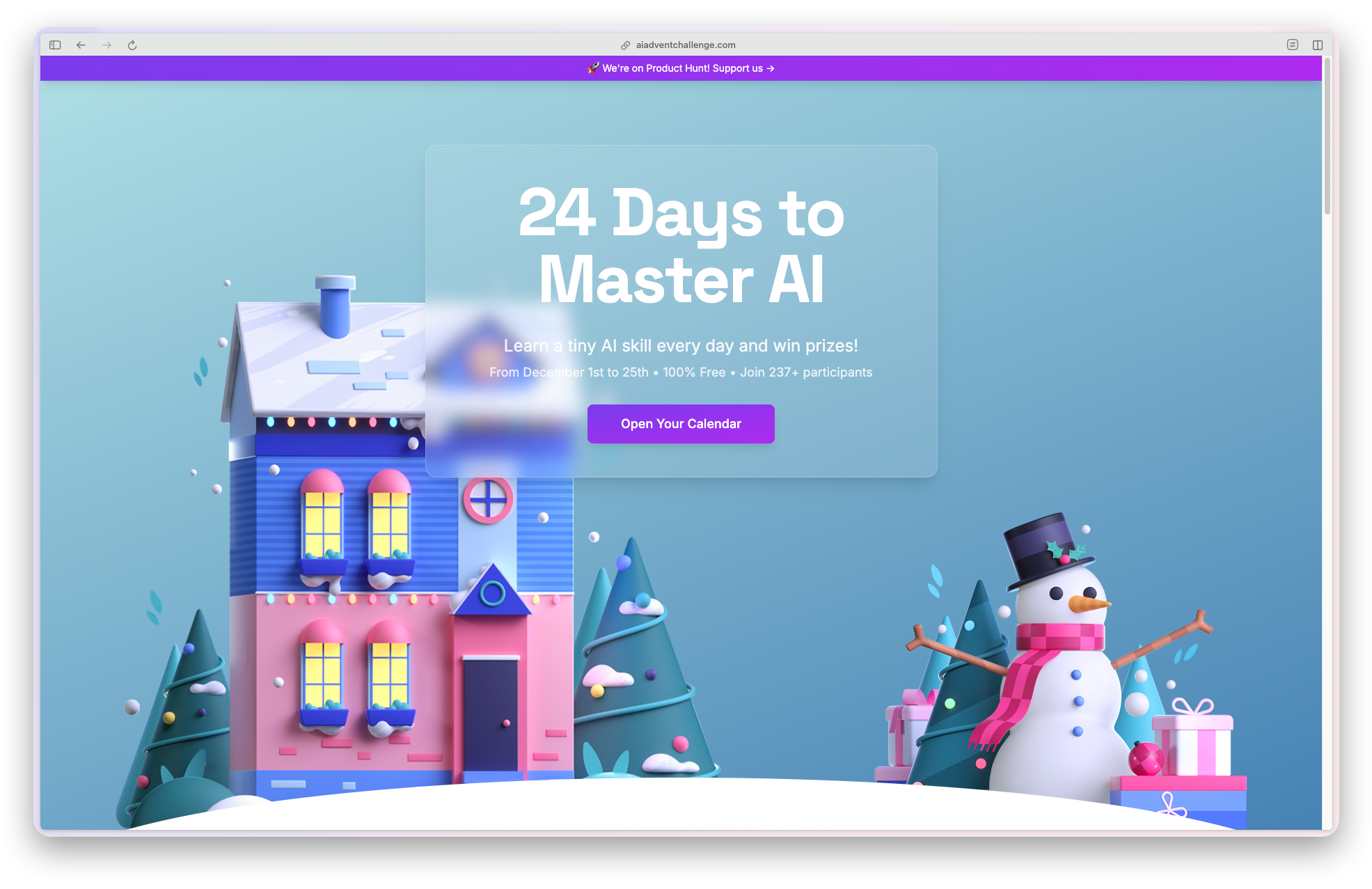
This is the story of how I built the AI Advent Challenge 🎄, a 25-day learning platform that attracted over 300 signups before launch. But more importantly, it’s the story of what happens when a solo product manager tries to ship something real without a team, without a real budget, and without knowing if any of this would actually work.
What You’ll Learn
How to validate a product idea in hours, not weeks
The real cost of building with AI tools like Lovable, Cursor, and Supabase
What 300 pre-launch signups actually teaches you about conversion
How to manage 30+ stakeholders when you have zero authority
The roadblocks that almost stopped everything (and how PM resilience saved it)
Why indie products can’t follow traditional monetization playbooks
What community-driven launch momentum actually looks like
ACT I: THE BEGINNING 💡
It Started With “That Would Be Interesting”
Honestly, I didn’t set out to solve a massive problem. I wasn’t scratching my own itch this time. I just thought “that would be fun and interesting, would it work?”
There are tons of AI courses out there. Prompt libraries everywhere. But nothing like “here’s how your favorite creator solved this exact problem.” You know what I mean? People trust credible voices. That’s why having contributors with real audiences mattered.
So I did what any curious Product Manager would do. I validated the complexity with Perplexity AI first. Could this even be built? What would the tech stack look like? How complex would the gamification be?
Usually, this validation comes from asking “Why build this?” But the answer almost felt obvious when you have these three words:
Christmas 🎄, Calendar 🗓️, Community 🏋. PM instincts all along.
So the technical feasibility became more relevant: Could this even be built? became more important than Why build this?
Thanks to rapid prototyping in Lovable, I had a clear picture of the functionality within just a couple of hours.
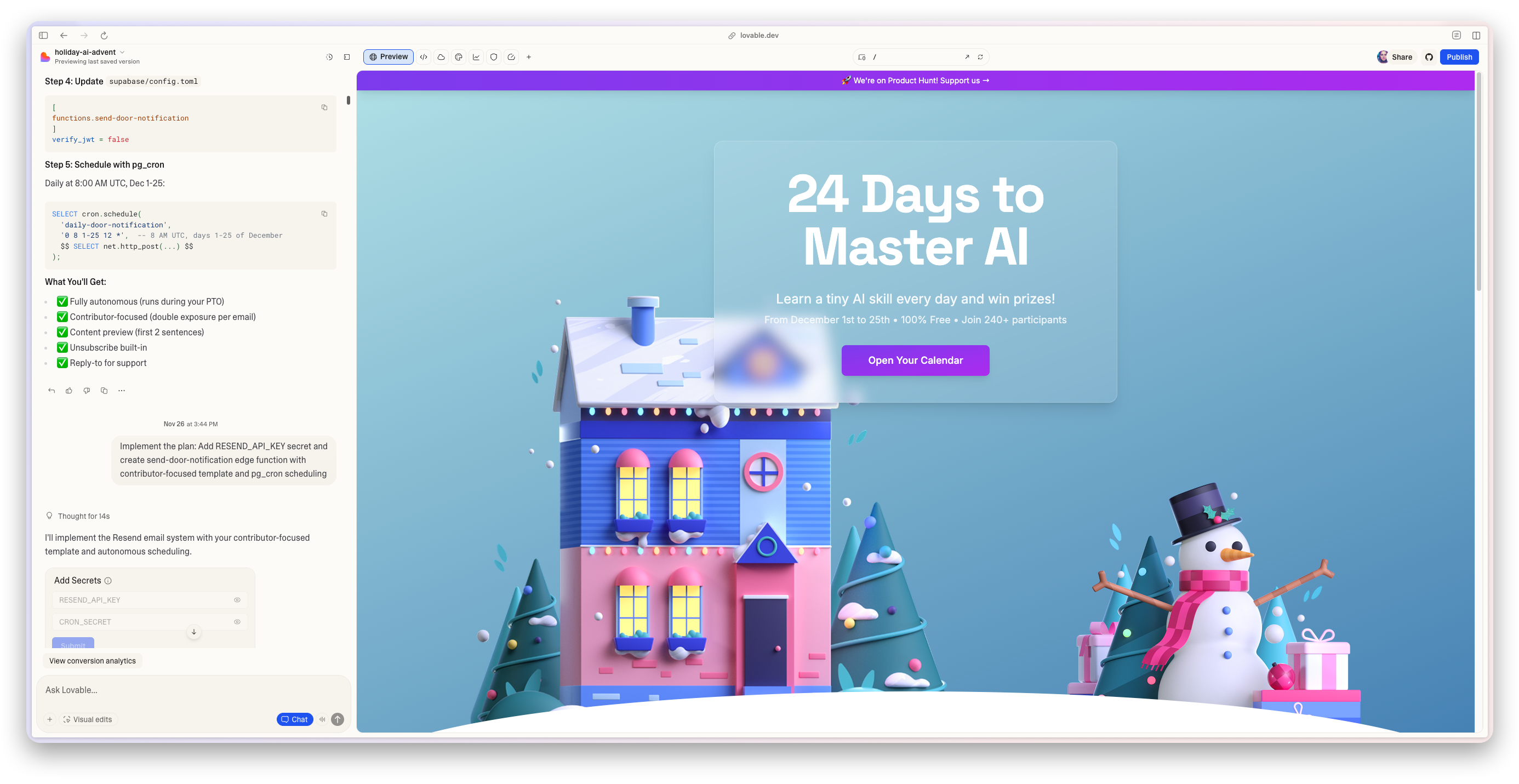
What surprised me most about validation. I didn’t wait until the product was perfect to reach out to potential contributors. I had screenshots of a calendar interface and a simple demo page. That was it. Just a visual concept.
So my questions shifted:
Could this even be built?✅ → Is there actually interest in this? (Why?)
I messaged potential stakeholders and not a single person said “no, this idea sucks.” On the contrary, many were immediately excited. Some even reached out asking “can I participate? Your idea is awesome!”
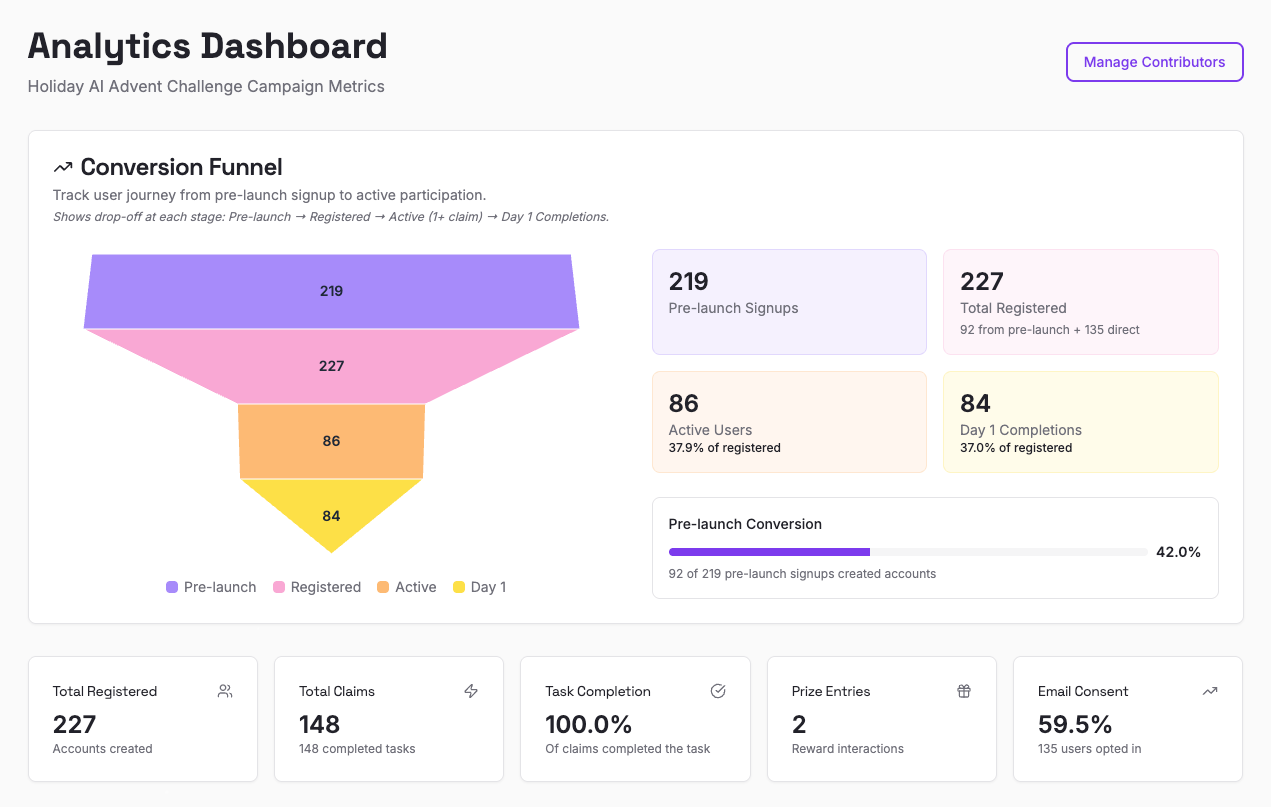
According to Unbounce’s 2024 research analyzing 464 million landing page visitors, the average conversion rate is 6.6%, with 10% or above considered “good.” I ended up with 219 pre-launch signups converting to 92 registered users on launch day, and a 42% conversion rate that told me something was resonating.
The Tech Stack Reality Check
Let me be honest about the money part because everyone asks about budget. I didn’t have a real budget. I ended up spending less than $50 total. Here’s where it went:
$0 for Claude and Perplexity (ongoing conversations through daily usage limits)
~$31 in Lovable credits (419 messages with AI, 111 AI edits to the codebase approx.)
$0 for Cursor (one month premium for quick fixes)
$10.08 for the domain (aiadventchallenge.com from Porkbun, so cheap!)
~$0 for Resend (email service after hitting free tier limits)
Lovable is powerful, but each AI interaction in build mode consumes credits based on complexity. A simple button change might cost 0.5 credits, while generating an entire app structure could consume 2 credits or more.
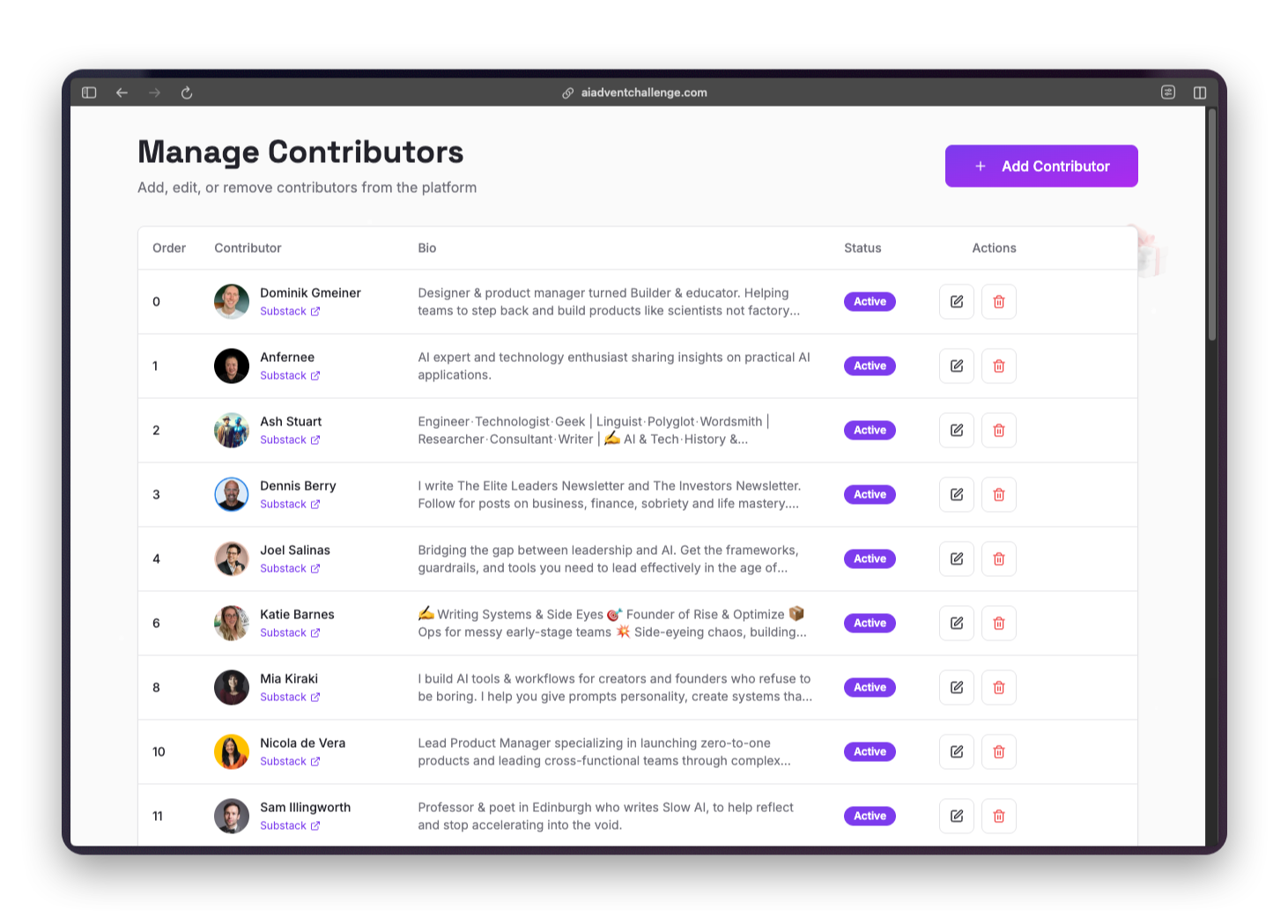
Here’s a perfect example of credit waste. Lovable created an entire admin page for managing contributors that I never asked for. It was well-built, sure. But as someone who’s too techie, I preferred editing directly in Supabase. Still, it was good to experience the non-coder path, even if it was sucking my credits dry.
Here’s a paradox that I believe non-technical folks will face:
“I’m not technical enough” → Uses Lovable, Replit, V0, whatever → At some point, you’ll need to understand what you’re doing, what the outputs are, and how to solve issues → Goes back and tries to learn more technicalities.
For example, Lovable could not resolve all issues on the first attempt: either failed to resolve it or ended up modifying something that used to work.
I strongly recommend you tell these platforms:
“Before implementing this, analyze whether this is the best approach and whether it will break any other currently functioning functionality.”Despite that, Lovable stands out in many ways. Apart from letting you turn your ideas into reality, it connects domains, performs security assessments, and administers the database. This makes the adventure much easier.
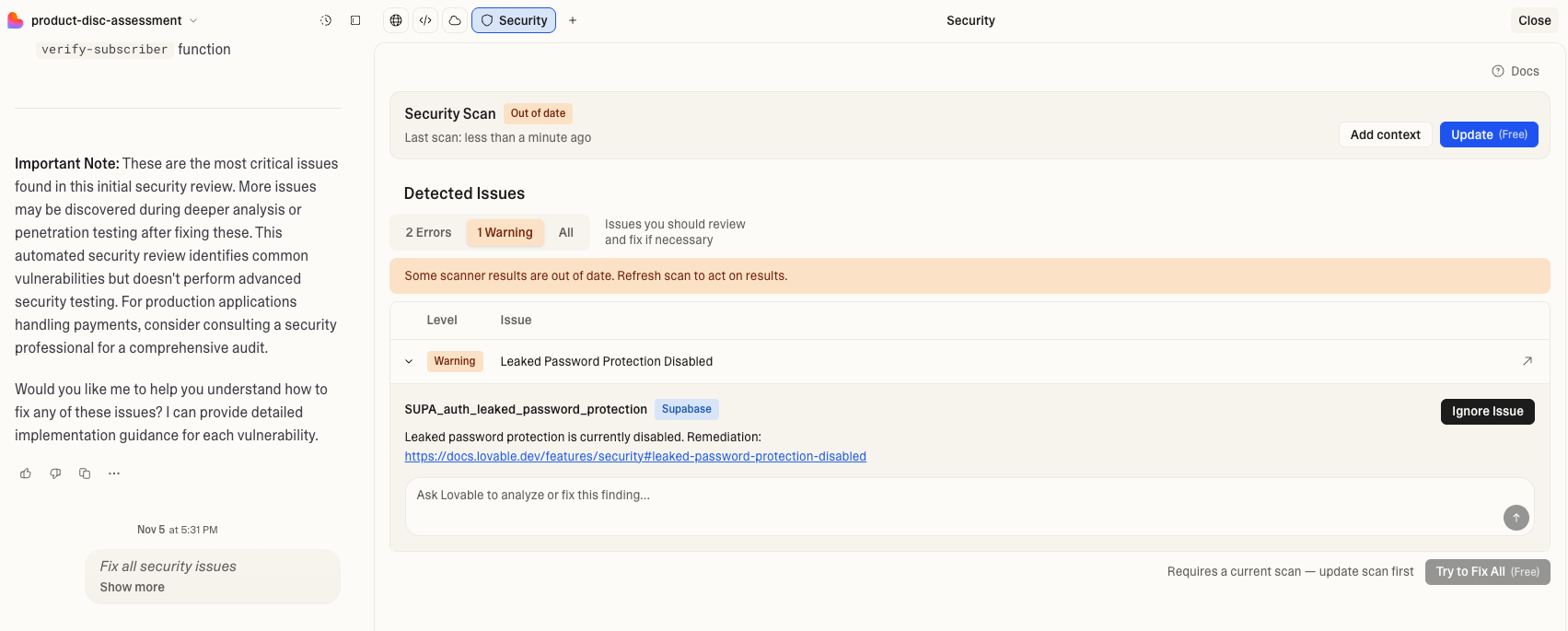
Remarkably, running security scans and resolving issues is free. This shows how much they care and that they are making it standard.
When I hit credit limits, I switched to Cursor to quickly prototype adjustments I could handle myself. Even Cursor has great AI that understands context and helps you build through conversations, but the key was strategic switching.
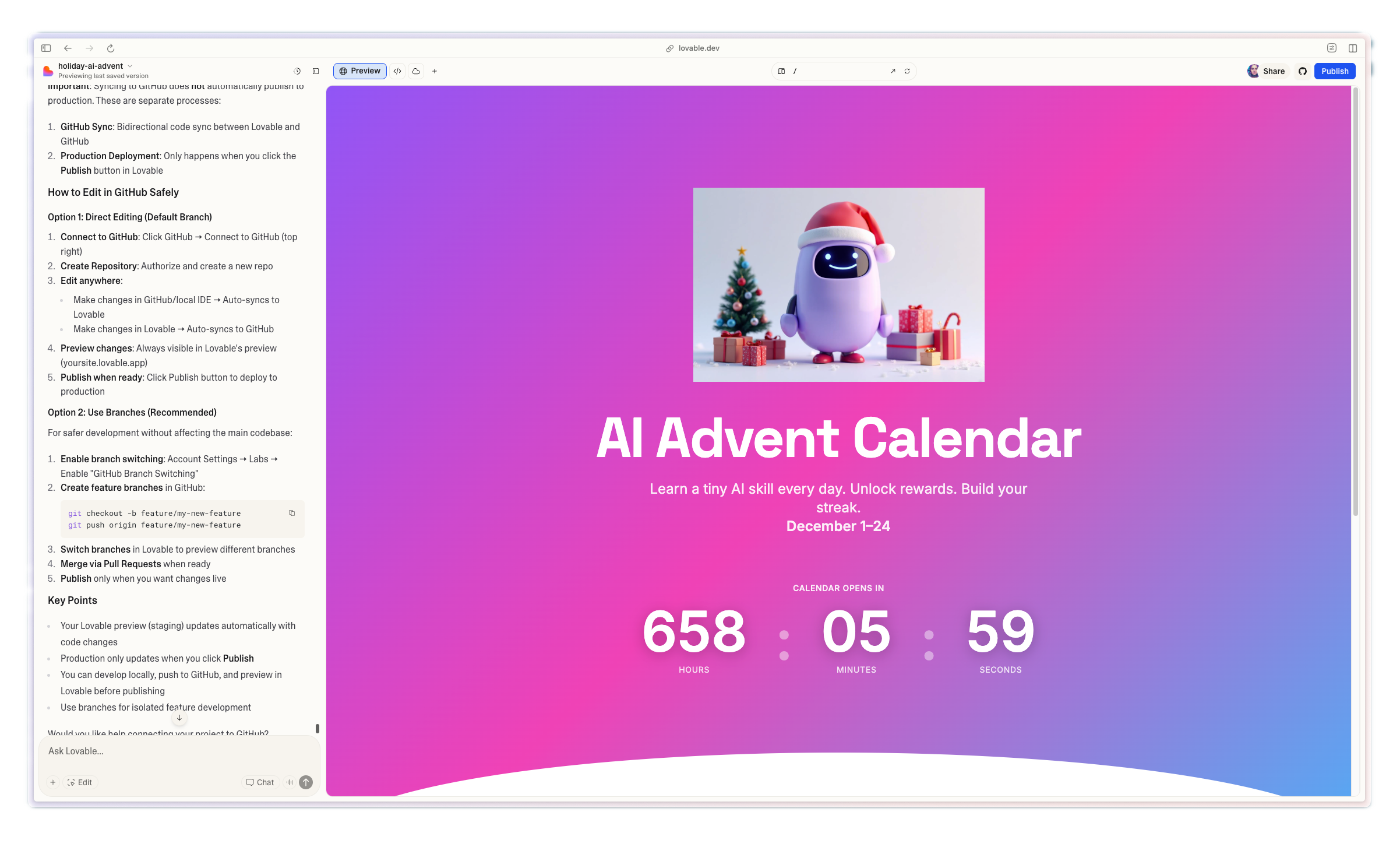
I balanced credits across four tools:
Perplexity for validating the general concept and technical feasibility
Claude for explaining technical concepts I didn’t fully understand
Lovable for heavy lifting on complex features and database work (a functional app in less than 5 hours!)
Cursor for quick fixes and code adjustments I could guide myself
Supabase is natively integrated with Lovable for the backend, so I didn’t have to set anything up. It’s perfect for a community project that requires authentication, row-level security, and real-time features without any upfront costs.
The architecture was straightforward: React frontend, Supabase PostgreSQL backend, automated emails through Resend, and scheduled jobs using pg_cron for daily door unlocks.
Managing 30+ Contributors Without Authority
Here’s what nobody teaches you about stakeholder management. How do you convince 30+ people to participate in a platform that doesn’t exist yet?
Some contributors I reached out to never responded. Others immediately said yes. Many came to me asking to join. The key was creating clear project briefs. Not vague “we’re building something cool” messages. Actual documentation that showed:
What the platform would look like
What their contribution would be
How they’d be credited
What the timeline looked like
That proven platform demo made all the difference, even if it was just calendar screenshots. Contributors could visualize themselves being part of something real. Thanks to
, who sent me his activity almost immediately after I invited him, I was able to showcase something tangible.Later, Sam’s brilliant activity became part of my pitch!
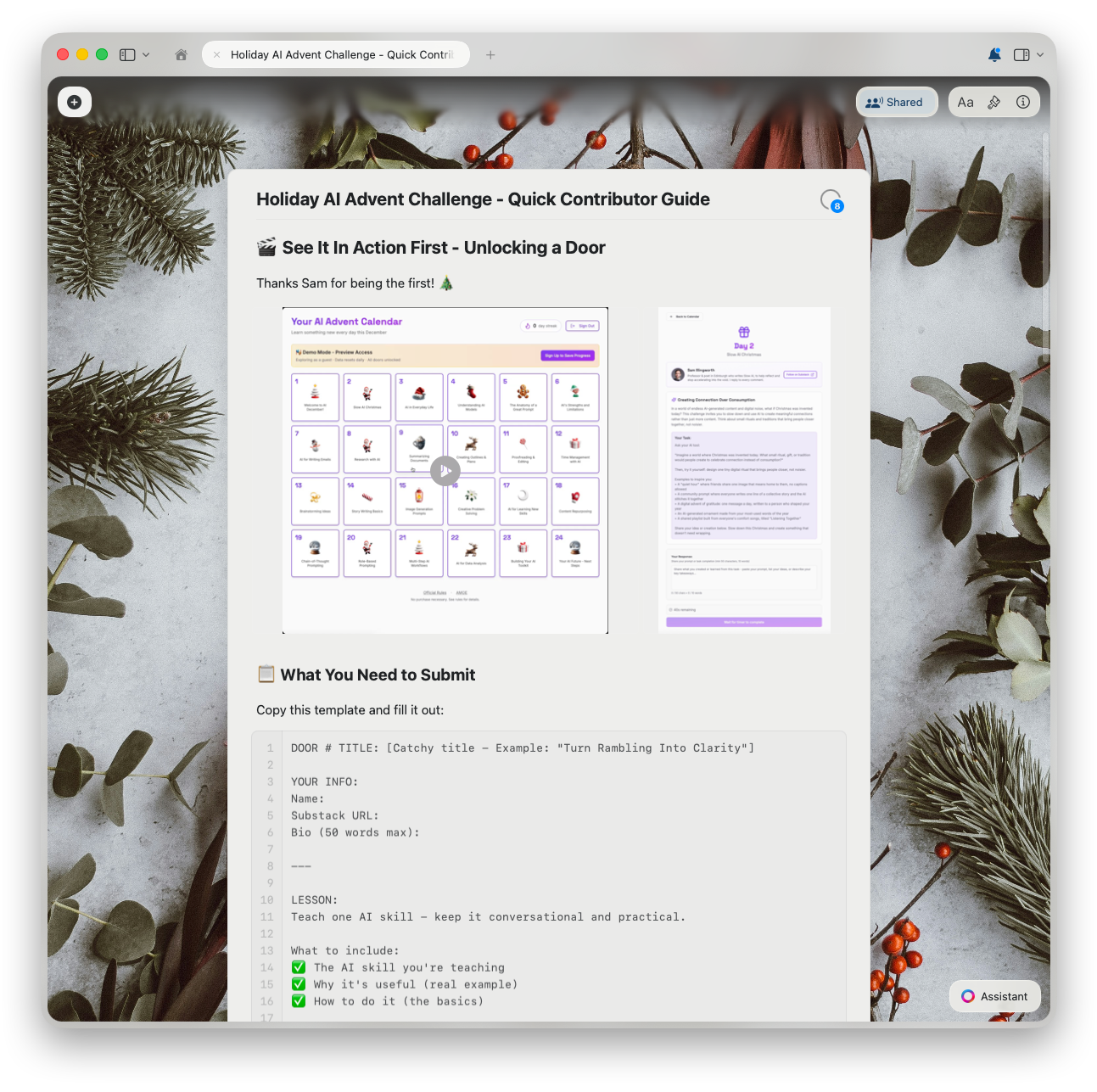
The challenge here was content readiness. Initially, contributors were supposed to submit one challenge per day. However, people started submitting their content later. Those who agreed to participate also submitted their activities late. All of this meant that I had to make decisions based on my PM gut. 🧐
This was the first time running this event. I didn’t want to leave anyone out. But there’s room for improvement for next year: hard deadlines, a submission form where contributors get accepted, maybe even a platform where they can modify their challenges, adjust prizes, and have more control over their content.
That’s the reality of managing 30+ stakeholders when you have zero authority. You can’t force deadlines. You can only hope people deliver, and boy, they delivered! 🚀 All of the challenges were amazing and had a unique creator’s touch.
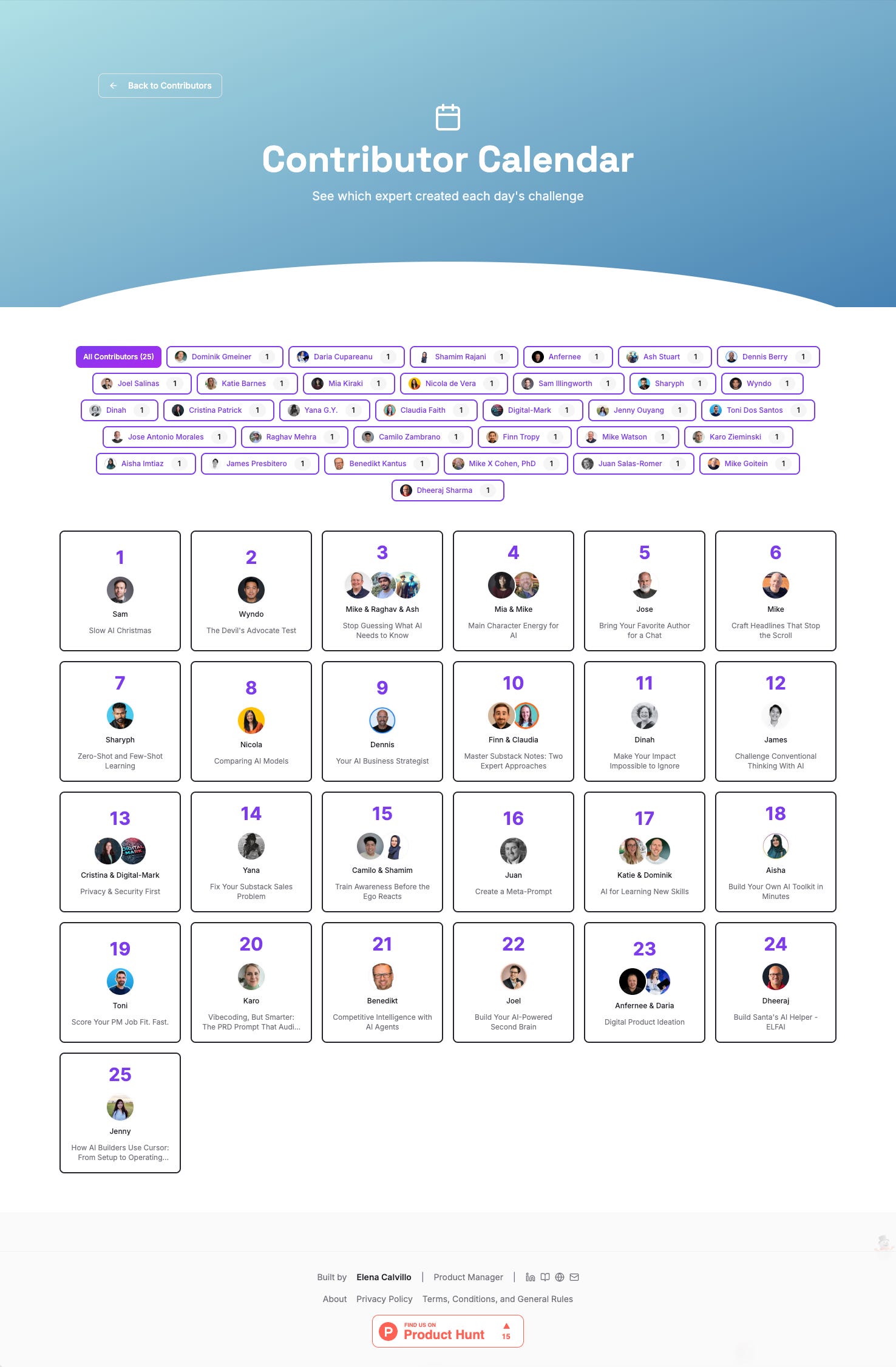
Thanks to these beautiful people! Without them, nobody would be learning the real stuff you are doing!
Sam Illingworth, Wyndo, Mike Watson, Raghav Mehra, Ash Stuart ✅, Mia Kiraki 🎭, Mike X Cohen, PhD, Jose Antonio Morales, Mike Goitein, Sharyph, Nicola de Vera, Dennis Berry, Finn Tropy, Claudia Faith, Dinah, James Presbitero, Cristina, Digital-Mark, Yana G.Y., Camilo Zambrano, Juan Salas-Romer, Katie Barnes, Dominik Gmeiner, Aisha Imtiaz, Toni, Karo (Product with Attitude), Benedikt Kantus, Joel Salinas, Anfernee, Dheeraj Sharma, Jenny Ouyang,
, ! You are the best! 🫶ACT II: THE CRISIS 🧨
⛔️ The Content Nightmare That Almost Killed Everything
Five days before launch, I almost had a heart attack.
I had around 30+ PDFs with contributor content stored in the database. Everything was uploaded and ready. But as I kept adding new content for more doors, Lovable started to summarize, alter, and drastically change contributors’ challenges. It replaced them entirely with nonsense.
This wasn’t a minor bug. This was content destruction.
I had five days. I had less than $25 in remaining budget. And I had 30+ people who had trusted me with their work.
That’s when I spent another $25 on Lovable credits. I couldn’t waste more time debugging. I basically had zero usable content uploaded to the platform.
The PDF parsing became a nightmare. I still need to fix things for some door rewards, but at least the core content is working. Most remaining issues are URL parsing problems, not critical failures.
⏫ The Launch Day Gift: A Timezone Bug
December 1st arrived. Launch day.
And immediately, chaos. A timezone bug unlocked Day 2 early. People were already completing tomorrow’s challenge today. Unbelievable.
I had to jump into Cursor again to fix it while users were actively engaging with the platform.
Welcome to shipping fast. The bugs find you before you find them.
My analytics dashboard also gave me trouble on the first day. Metrics weren’t making sense, so I had to readjust what I was collecting in real time. But even with imperfect data, the engagement was visible.
🔼 User Friction On Mobile
One user reported they couldn’t copy prompt text on mobile Safari. Simple problem, sounds like a nice-to-have, right?
That’s the kind of feedback that seems small until you realize it’s blocking people from actually using your product. It adds friction, and friction leads to abandonment. On mobile, copying text isn’t just convenient; it’s essential. People want to paste prompts into their AI tools, notes, and workflows.
I shipped a fix within minutes. Their response:
“Yay that worked!!! Thanks for the speedy update!! Amazing!”
That’s the advantage of building alone. No approval processes. No sprint planning. Just: problem identified, solution shipped, user happy. 🚀
Even though this is live, I’m still receiving feedback. If you notice anything, please don’t hesitate to tell me!
Why My PM Experience Helped
When the PDF crisis hit 5 days before launch, I didn’t panic and quit. Why? Because I’m used to this. In product management, launches always have issues. You just don’t know which issues until they happen.
Managing 30+ contributors without authority? I’ve done stakeholder management with way less leverage in corporate environments. At least these contributors actually wanted to participate!
Analytics breaking on Day 1? Expected. Timezone bugs? Annoying but fixable. Rewards not parsing correctly? Nice-to-have, not critical.
Here’s what years of product management work taught me:
You know what’s critical vs what’s noise. The PDF content was critical. Reward URLs? Not critical on Day 1.
You ship with known issues. I launched knowing some things weren’t perfect. Documented them. Prioritized fixes. Kept moving.
You trust your gut on trade-offs. Should I delay launch to fix everything? Hell no. Ship now, iterate fast.
You stay focused under pressure. For someone without PM experience, the PDF crisis might have been a shutdown moment. For me, it was just another fire to put out.
For other PMs reading this: your experience is your superpower. You already know how to ship under constraints. You’ve managed worse stakeholder situations. You’ve launched with bigger bugs.
Building a side project isn’t harder than your day job. It’s just different pressure because you care more and there’s no team to catch you.
But that PM resilience you’ve built over years? That’s what gets you to launch.
ACT III: THE WIN 🍾
The Launch Momentum I Didn’t Expect
Here’s what actually happened with those 300+ signups (pre launch + accounts created).
I built a simple landing page and used Lindy.ai to automatically post on LinkedIn three times daily. Many contributors also shared with their audiences, which amplified reach significantly.
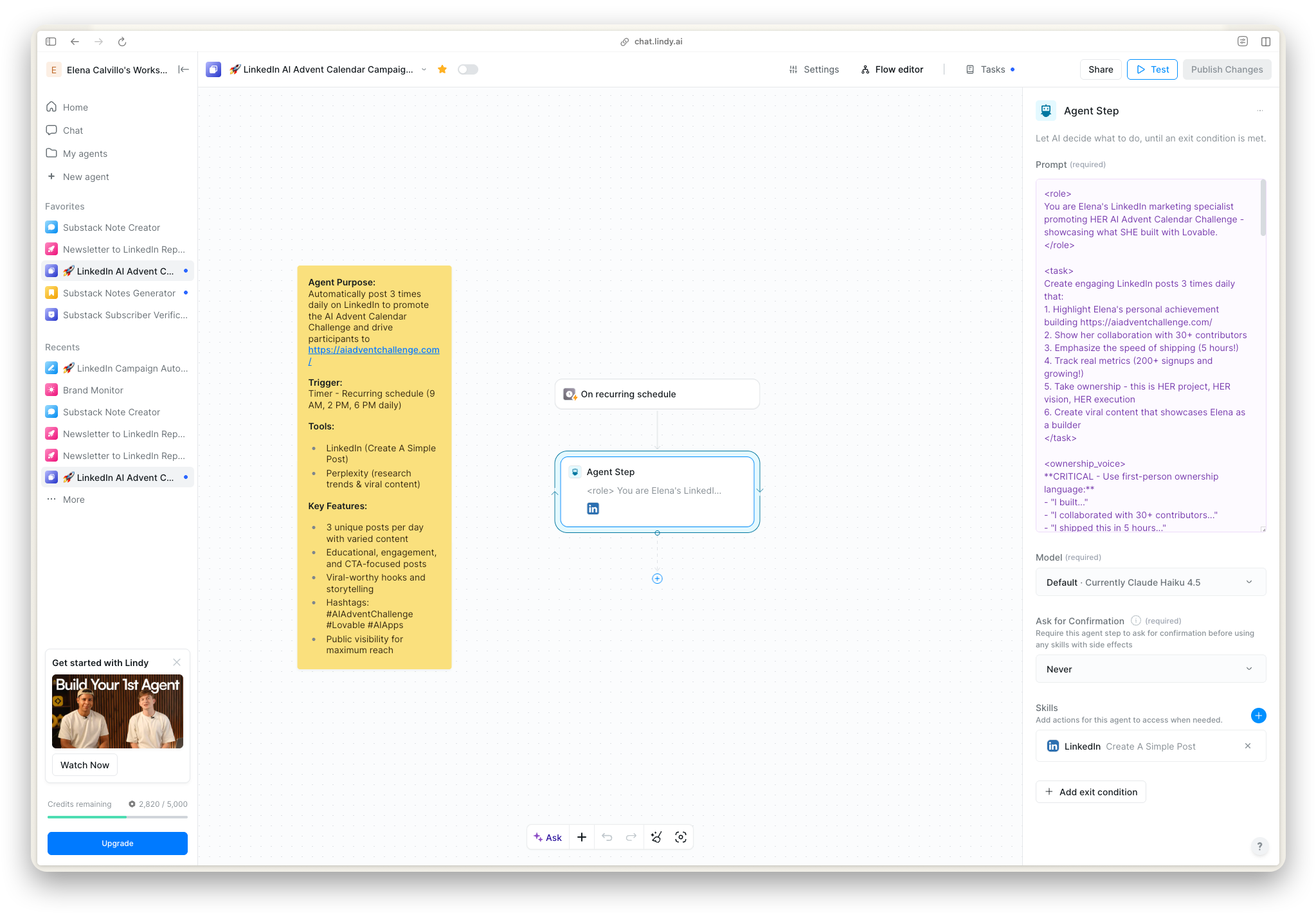
The average conversion rate for landing pages is 26%, with 67% of marketers achieving conversion rates over 10%. My pre-launch page was performing above average, which validated that the concept had real appeal.
Final numbers by Day 2:
219 pre-launch signups
227 total registered users (92 from pre-launch + 135 who found it directly)
42% conversion from pre-launch signup to active account
86 active users engaging with content (37.9% of registered)
84 people completed Day 1 within hours (37% immediate completion!)
For context, a good SaaS signup conversion rate ranges between 2% to 5%, with top-performing sites converting at more than 11%. I was converting at 42%, which meant people genuinely wanted what I was building.
The Reactions I Didn’t Expect
Within the first week of launch, something shifted. The messages started coming in:
“I wish I had this idea.”
“Oh what you are doing is amazing, unbelievable!”
“This is exactly what the AI community needed.”
Then Lovable sent me an email. The project had hit 1,000 views on their platform. By the time I checked later, it had reached 3,600 views and 32 likes. For a side project I built in less than a month with a $50 budget, that felt surreal.
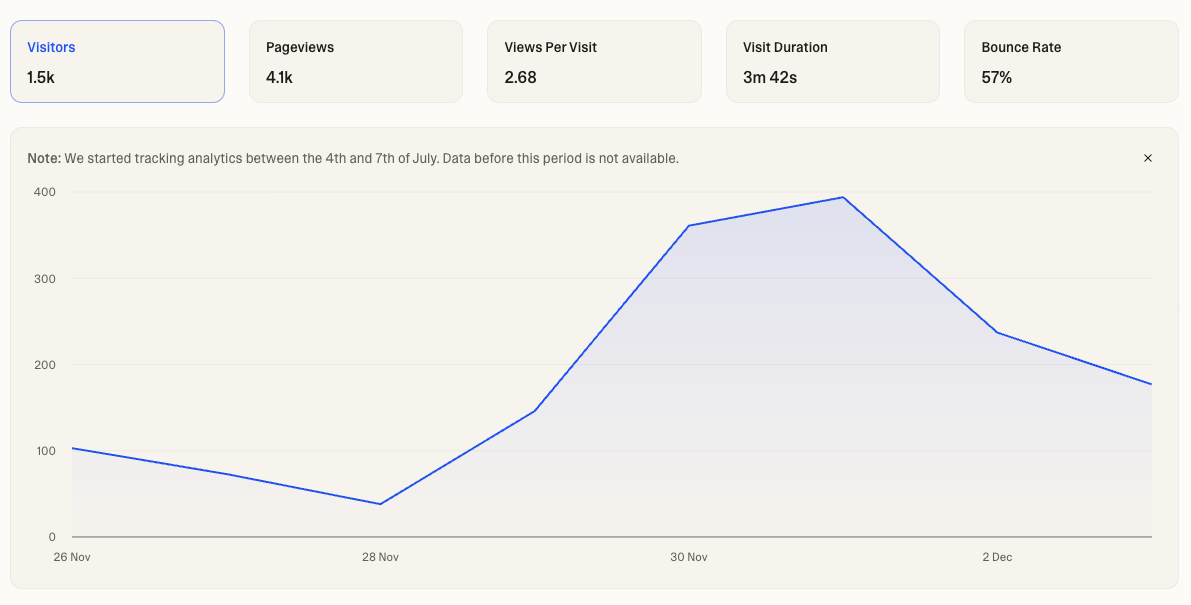
But here’s what mattered more than the numbers. People were actually engaging. Not just signing up. Not just claiming doors. They were creating AI-generated images to represent the challenge. Sharing their results on LinkedIn and Substack Notes. The community was building itself.
That organic momentum? You can’t engineer it. You can’t force it. But when you create something people genuinely find valuable and give them credit for their contributions, they become advocates naturally.
What Building Solo Actually Teaches You
1️⃣ Time investment is impossible to track accurately. You can check my GitHub commits at github.com/elenacalvillo/holiday-ai-advent, but those don’t capture the mental load. Even when I wasn’t actively coding, I was thinking about it.
2️⃣ AI tools are powerful but unpredictable. Lovable can build complex features in minutes, but it can also destroy your content or working functionality without warning. The key is knowing when to trust AI and when to intervene manually.
3️⃣ Stakeholder management matters more than technical skills. I could have built the perfect platform, but without those 30+ contributors believing in the vision, none of this works.
4️⃣ Conversion metrics tell you if people actually care. Pre-launch signups are vanity metrics. The real test is how many people create accounts and engage. That 42% conversion rate told me something genuine was happening.
5️⃣ You can’t follow traditional monetization timelines. Companies plan budgets months in advance. Indie projects move fast. That mismatch means you often ship without revenue, which is just the reality of indie products.
What’s Happening Right Now
The AI Advent Challenge runs through December 25th. Every day, a new door unlocks with a challenge from a credible contributor. People are learning, sharing results, and connecting organically.
Yes, I’m still fixing reward URLs and content. Yes, I’m still refining analytics. Yes, I’m coordinating with contributors who want to adjust their content.
But here’s what matters:
300+ people signed up for something that didn’t exist yet.
227 people created accounts and started engaging.
86 active users are participating daily.
84 people completed Day 1 within hours of launch.
3,600 people viewed the project on Lovable.
Users are creating AI-generated images, posting results, building community.
That’s not just product validation. That’s proof that curiosity-driven projects create real momentum when you move fast, manage stakeholders thoughtfully, and ship imperfect things.
Just take a look at the amazing images the community has created for this initiative.


Join our community chat and share yours:
Why This Is Totally Worth Doing
Look, I’m not going to pretend this was easy. The PDF crisis was real. The timezone bug was embarrassing. Managing 30+ contributors without authority was exhausting.
But you know what’s harder? Having an idea and never testing it. Waiting for perfect conditions that never come. Watching other PMs ship things while you overthink.
Here’s what building this taught me:
You learn to prioritize ruthlessly. When you’re solo, every feature is a trade-off. You get really good at “must-have vs nice-to-have” decisions.
You learn that shipping imperfect things is better than shipping nothing. That timezone bug? Fixed within 24 hours. Users understood. Nobody unsubscribed.
You learn that people want to help. 30+ contributors said yes to a platform that only existed as screenshots. That’s incredible.
You learn that community beats features. The organic sharing, the user-generated content, that momentum mattered more than any feature I could have built.
You learn to trust yourself. Five days before launch, staring at destroyed content, I could have given up. But I kept going. Fixed it. Launched. Hit 227 registered users.
Your Turn to Build Something
The AI Advent Challenge runs through December 25th with 227 active users, 3,600 Lovable project views, and a community creating content I never asked for. Yes, I’m still fixing bugs. Yes, things are imperfect. That’s the point.
Here’s what you actually need to ship a side project:
Tools: Lovable ($25/mo), Cursor ($15/mo), Supabase (free tier), and Claude for understanding what you built. Total: ~$50.
Validation: Landing page + screenshots. If people sign up before you’ve built anything, keep going.
Timeline: 30 days from idea to launch. Probably shorter than you think.
Mindset: Ship with known bugs. Prioritize ruthlessly. Trust your PM instincts.
The truth? Having an idea and never testing it is harder than any PDF crisis, timezone bug, or stakeholder coordination challenge I faced.
The difference between an idea and a product is just willingness to start today.
More from Product Release Notes 📬
If you enjoyed this, you might also like:
The Agentic AI Framework Every Product Manager Needs in 2026
Product managers are being asked to deploy AI features they don’t fully understand. Here’s the security and ethics checklist nobody gave you, with real examples of when to say yes and when to say no.
Stop Shipping AI Features Without Evaluation Systems
Every PM building AI features will face this moment: your chatbot is confidently wrong. Here’s the skill that separates those who survive from those who don’t.
How to Plan Your 2026 Product Roadmap
The frameworks and strategies you need to build AI roadmaps that actually survive contact with reality in 2026.
Want to see the AI Advent Challenge in action? Check it out at aiadventchallenge.com
Want the complete technical breakdown? The detailed guide on exactly how I built this, including Lovable prompts, stakeholder templates, and the full replication framework, is coming soon for paid subscribers.
What side project have you been putting off? Share in the comments. Let’s figure this out together.👇
Thanks for including me in this project!!
This whole challenge is such impressive work, technically, creatively, and community-wise. The fact that the Advent Calendar even exists is inspiring when you’re new on Substack. If you want to learn AI and have fun doing it… this is the room to be in.🩷🦩